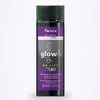
Is Fanola No Yellow Any Good? What It Does and What It Can't

Fanola No Yellow Shampoo is good at one job: depositing violet pigment to cancel yellow on blonde, bleached, highlighted or grey hair. It cannot lighten hair, it is the wrong tool for orange, and it can over-tone if left on too long. No independent test of Fanola specifically has been published.
Is Fanola No Yellow good? The short verdict
Probably yes for the hair Fanola built it for, and no for orange tones or hair that is not light enough. No independent test has checked Fanola's formula. Fanola's own page calls it an anti-yellow shampoo for blonde, bleached, highlighted and grey hair, meant to leave a neutral or cool result. How purple shampoo works explains why violet cancels yellow.
No star ratings or before-and-after photos here: this store holds too few reviews per product to summarise honestly. Instead, the label, Fanola's claims, and the independent evidence.

What is actually in Fanola No Yellow Shampoo?
The violet is Acid Violet 43 (CI 60730). On the ingredient list Fanola publishes for the classic shampoo, it comes seventh of nineteen ingredients. It sits after water, four cleansing agents and citric acid, ahead of a guar-based ingredient and the fragrance. Fanola also names a grape (wine) extract "for antioxidant action": a manufacturer statement, not a tested result.
Acid Violet 43 is not a Fanola secret. In a sample of 21 purple and silver shampoos gathered for the chemistry review behind this article, including L'Oréal Professionnel Silver and Matrix So Silver, it was the only violet dye listed. A German consumer test says all 20 silver shampoos it bought contained it. What differs between brands is the formula around the dye, and how much is used.
That amount cannot be read off a label. Ingredients must be listed in descending order of weight, but anything under 1% may appear in any order, so once you are past the 1% line, a dye's position tells you little about the amount, and you cannot use it to compare products. Fanola publishes no dye concentration, and says the pack list is the current one.
| Fanola product | Pigment and its position on Fanola's list (not a measure of amount) | Leave-on time, on Fanola's own page | Fanola says it is for |
|---|---|---|---|
| Fanola No Yellow Shampoo | Acid Violet 43, 7th of 19 ingredients | "A few minutes"; no number given | Blonde, bleached, highlighted and grey hair |
| Fanola Wonder No Yellow Shampoo | Acid Violet 43, 9th of 28 ingredients | 1 to 5 minutes | Blonde, bleached, highlighted and grey hair, with added softness and shine |
| Fanola No Yellow Mask | Acid Violet 43, 6th of 22 ingredients | 3 to 5 minutes, on towel-dried lengths and ends, then rinse | The conditioning step after No Yellow Shampoo |
| Fanola Wonder No Orange Shampoo | Acid Violet 43 with a blue dye, CI 42090 (per published ingredient lists) | Not captured here; follow the pack | Orange tones on medium and light blonde and light brown hair |
What does it do, and what can't it do?
It adds a violet tint over yellow. Fanola's page describes a "progressive-release" pigment: the longer it stays on, the stronger the neutralising effect, so you control the result by timing. Its listed results, "maximum neutralisation", "ultra-luminous blonde" and softness, are Fanola's own claims, with no published test behind them.
The "it brightens blonde" belief
The claim: purple shampoo makes blonde hair lighter or brighter. Why people believe it: toned hair looks cooler and cleaner, and Fanola itself promises an "ultra-luminous" blonde. What the evidence supports: Acid Violet 43 is a pre-formed, non-oxidative direct dye, and Fanola's ingredient list shows no peroxide or ammonia. Nothing in the bottle can lift colour. The nearest optical explanation comes from a 1975 textile-industry book on whitening agents: it says bluing makes a material "appear whiter" though "in fact it is greyer", because the dye absorbs light too. One small hair study, judged by eye, found that the swatch given its strongest violet dose looked "grader", probably meaning greyer (the authors read that as better yellow-masking; one swatch per dose). What to do: treat it as maintenance on hair already light enough. Hair that is too dark needs lightening, which is salon work; hair that is orange rather than yellow needs a blue-toned product instead.
Fanola No Yellow deposits; it never lifts. It can make yellow read as neutral. It cannot take hair up a level, remove orange, or undo a colour result you dislike.
What independent evidence is there that purple shampoo works?
Less than the marketing suggests, and none of it about Fanola. Of 234 sources checked for the chemistry review behind this article, none is an independent, peer-reviewed, instrumented test of a commercial purple shampoo as sold. What does exist:
- ÖKO-TEST (Germany, 2025). This independent consumer magazine test is not peer-reviewed. It measured 20 silver shampoos with an instrument on yellowed, fully grey hair, three tresses per product. The magazine says 6 of the 20 produced no perceptible effect, which implies 14 did. ÖKO-TEST's measure was total colour change, which includes darkening, so a pass shows the hair changed colour, not exactly how much less yellow it got. Per-product results are paywalled and product names are known only second-hand, so we cannot tell you whether Fanola was tested, let alone how it did.
- Industry data. A dye supplier and a manufacturer measured violet dyes reducing yellowness on hair. Neither is independent.
- Small academic studies. One made its own Acid Violet 43 shampoos and judged them by eye, one swatch per treatment. Another tested a salon-style violet mix plus an ash dye, one sample per condition.
The honest reading: violet shampoos can produce a visible change, but Acid Violet 43 on the label does not guarantee one. All 20 ÖKO-TEST products contained it.
On Fanola's own numbers. The Wonder No Yellow page reports 8% more softness, 11% easier rinsing and 10% better combing than the classic shampoo. These come from the manufacturer's 120 in-salon self-assessment tests: worth knowing, not independent.
Who should use Fanola No Yellow, and who should not?
It suits hair that is already light (bleached, highlighted or grey) and drifting yellow between colour appointments.
It does not suit:
- Orange tones. Violet targets yellow. Fanola's own answer for orange is Wonder No Orange, which it positions for medium and light blonde and light brown hair. The range is in the Wonder No Orange collection, and blue shampoo for orange tones explains the switch.
- Hair not lifted light enough. Acid Violet 43 is a direct dye that only adds tone; it cannot lighten, so hair that is still darker than the blonde you want needs lightening first.
- Colour corrections. Big corrections, going more than a couple of levels lighter, chemically damaged hair and anything previously henna'd are salon jobs.
Over-toning is the predictable risk. Fanola's own page says the effect gets stronger the longer it stays on. Other brands add that porosity and starting level matter. No study has measured hair tipping into lilac, but manufacturers' patents describe hair going "too blue or violet". Strand-test first on very light or porous ends, and start short.
Two practical points come straight from Fanola's directions. Wear gloves: the instructions open with "wear appropriate gloves". And it goes on wet hair: massage, leave for a few minutes, lather and rinse. Fanola gives no fixed time for the classic shampoo. The full routine is in how to use purple shampoo.
If softness matters most, Fanola's own tip for the classic shampoo is to alternate it with Wonder Nourishing Shampoo and follow with the No Yellow Mask. It also sells Wonder No Yellow as the same neutralisation with more softness. Fanola No Yellow versus Wonder No Yellow sets the two side by side.

The honest verdict
Fanola No Yellow Shampoo uses the category's standard violet dye, and its makers say you control the result by timing. Used that way (wet hair, gloves, a short leave-on, a conditioning step after), it is a reasonable choice to try for light blonde or grey hair that turns yellow between appointments. The standard dye alone is no guarantee, though: in the one independent test, 6 of 20 silver shampoos, all with the same dye, made no perceptible difference.
It is a poor choice for orange tones, for hair that is not light enough, and for fixing a colour result. Anyone who says it is proven better than other purple shampoos is going beyond the evidence: no independent comparison exists.
Common questions
Does Fanola No Yellow really work?
Fanola No Yellow deposits Acid Violet 43, the violet dye commonly listed on purple shampoos (the only violet dye listed in the sample behind this article, and, the magazine says, contained in all 20 products of the German test). Violet shampoos can visibly change the colour of yellowed hair; the yellowness-specific measurements come from industry. No independent test of Fanola specifically has been published. In one German consumer test, 6 of 20 silver shampoos showed no perceptible effect on grey hair. Fanola says a longer leave-on gives a stronger result, and other brands add that porosity and starting colour matter.
Should I buy Fanola No Yellow or Fanola Wonder No Orange?
Choose by the tone you can see. Fanola No Yellow is violet and targets yellow on blonde, bleached, highlighted or grey hair. Fanola positions Wonder No Orange for orange tones on medium and light blonde and light brown hair. If your brassiness looks orange rather than lemon-yellow, choose Wonder No Orange.
Is Fanola No Yellow suitable for natural grey hair?
Fanola lists grey hair alongside blonde, bleached and highlighted hair as a target for No Yellow. No independent study has compared how one purple shampoo performs on natural grey versus bleached blonde, and the yellow has partly different causes in each. One 1987 industry patent, on a violet conditioner rather than a shampoo, reported much less violet dye taking on unbleached white hair than on bleached white hair, scored by eye. That hints natural grey may pick up tone less readily than bleached hair, but nobody has measured it with an instrument. Start with a short leave-on and adjust. For the grey-specific angle, see non-yellowing shampoo.
Can I use Fanola No Yellow on dry hair?
Fanola's directions say to apply Fanola No Yellow Shampoo to wet hair, massage, leave for a few minutes, work into a lather and rinse. Dry application is not a method Fanola describes. Stick to wet hair and the pack instructions, and adjust the time rather than the method if you want more effect.
The No Yellow range on this site
Price at the time of writing; prices change.
Fanola No Yellow Shampoo 350ml, £6.73 →
The full No Yellow care collection →
Always follow the instructions supplied with the product. Fanola's page prints no allergy-test step for this shampoo, which contains a direct dye and no developer. If you have reacted to hair products before, check the pack leaflet. Strand-test before toning unfamiliar hair, and if you are unsure about a colour service, speak to a professional colourist.
-
Posted in
Blonde, Choosing and comparing, Fanola No Yellow, Purple shampoo