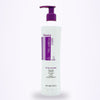
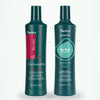
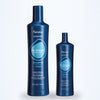
Fanola No Yellow vs Wonder No Yellow

Fanola No Yellow and Fanola Wonder No Yellow list the same violet dye, Acid Violet 43, and Fanola says Wonder "delivers the same neutralization performance as the classic No Yellow Shampoo". What separates them is price and after-feel: the classic is cheaper at 350ml and 1000ml, while Wonder adds three conditioning polymers, marula oil and dragon fruit extract and is marketed on softness.
Still deciding whether a purple shampoo is the right tool at all? Start with our guide to how purple shampoo works and what it can't do.
Fanola No Yellow vs Wonder No Yellow: what is the difference?
Same dye, different finish and price. Both shampoo ingredient lists on our twin-pack listings include Acid Violet 43, and Fanola's own Wonder page claims the same neutralisation as the classic. Wonder is marketed on softness and easier rinsing, and is the cheaper of the two only at 100ml.
| Fanola No Yellow Shampoo (classic) | Fanola Wonder No Yellow Shampoo | |
|---|---|---|
| Colourant on the published ingredient list (our twin-pack listings) | Acid Violet 43 | Acid Violet 43, the same dye |
| Leave-on time, as published on our listings | 3–5 minutes on the 100ml, 350ml and 1000ml; the 100ml adds "or longer" and the 350ml "up to 10" for a more intense tone; the twin pack says 1–5 | 1–5 minutes on the 100ml, 350ml, 1000ml and twin pack, matching Fanola's own directions |
| Frequency, as published | Once a week (the 100ml and twin pack add "or as needed") | 1–2 times a week (1000ml); once a week or as needed (twin pack) |
| Care ingredients only one shampoo lists (a selection, from our twin-pack listings) | Wine Extract and Hydrolyzed Silk (silk protein broken down into smaller pieces) | Polyquaternium-7, Polyacrylamidopropyltrimonium Chloride and Hydroxypropyltrimonium Inulin (conditioning polymers), plus Sclerocarya Birrea (marula) Seed Oil and Hylocereus undatus (dragon fruit) extract |
| Listed price, all three sizes, at the time of writing | £3.39 / 100ml · £6.73 / 350ml · £12.00 / 1000ml | £2.90 / 100ml · £7.41 / 350ml · £14.82 / 1000ml |
What is classic Fanola No Yellow?
Classic No Yellow is a violet toning shampoo for blonde, bleached, de-coloured and grey hair gone warm. Our 1000ml listing says it is "formulated with extra violet pigments" and "neutralises unwanted yellow tones that often develop in bleached or de-coloured hair". That is our listing copy, not Fanola's.
Neither twin-pack shampoo ingredient list includes hydrogen peroxide or any other developer, so we read both as deposit-only: they add violet, they do not lift. The EU's scientific safety committee (SCCS) assessed Acid Violet 43 as a semi-permanent, "non-oxidative" hair dye. The tone does not last: Revive Hair Artists, a UK salon that stocks Fanola, says a purple tint "will fade with regular washing", which is why the listings give a weekly frequency. More in our piece on what No Yellow shampoo is.
Fanola No Yellow Shampoo 350ml is £6.73 at the time of writing, 68p less than Wonder's 350ml.

What is Fanola Wonder No Yellow?
Wonder No Yellow is the same violet dye in a more conditioning base. Alongside Acid Violet 43, the Wonder shampoo lists three conditioning polymers the classic does not: Polyquaternium-7, Polyacrylamidopropyltrimonium Chloride and Hydroxypropyltrimonium Inulin. Some users take that to mean Wonder tones less. One Reddit commenter said it "isn't as strong as the classic no yellow", and Revive calls the original "the more intensely pigmented version". Neither is a test.
Fanola's position is that the toning is the same. Its Wonder page lists an "Extra Care Complex" of "emollient and illuminating ingredients" and, as a separate point, says "Dragon Fruit and Marula oil give softness and shine to the hair". The Wonder mask in our twin pack also lists dragon fruit extract, where our classic No Yellow Mask 1L lists Wine Extract.
The Fanola Wonder No Yellow Shampoo 1000ml is £14.82 at the time of writing.

What we will not read into the labels. Under the cosmetics regulation (Regulation 1223/2009, as retained in UK law), ingredients are listed in descending order of weight, but those under 1% may be listed in any order after the rest, and the label does not mark where 1% falls. Acid Violet 43 is seventh of 24 on the classic shampoo and ninth of 27 on Wonder. That gap tells you nothing reliable about how much dye either contains.
Fanola also reports +11% easier rinsing, +8% softness and +10% combability for Wonder against the classic, from "120 in-salon self-assessment tests after first use". These are the brand's own figures, not an independent test, and they cover feel, not toning.
Fanola Wonder No Yellow shampoo review: does it fix the classic's complaints?
Not shown either way. Most of the user comments we read are about the classic, and several Mumsnet and Reddit posters name Fanola as one of the stronger purple shampoos. Recurring complaints include dryness, a lilac or silver cast, stained hands, and one commenter finding it "did absolutely nothing" for warm brown tones. Revive notes purple shampoo "may not make much visible difference" on strongly orange hair, since violet is aimed at yellow.
Revive puts purple results down to leaving the original on too long or using it too often on very pale or porous hair. Timing is covered in our guide to using purple shampoo.
What does a Fanola No Yellow before and after really show?
A fair before and after shows yellow blonde reading cooler and cleaner, not lighter. Violet and blue dyes absorb yellow-red light, so the hair reflects less of it and looks less yellow; with no developer in either formula, nothing is lifted. An after that looks lilac or silver is over-toning, not success.
Can you use both, or alternate between them?
Yes. Both list the same dye, so alternating is not layering two tones: it is the same violet in two different bases. Fanola's classic No Yellow page suggests alternating with Wonder Nourishing Shampoo, a non-toning shampoo, not with Wonder No Yellow. If you rotate the two purple shampoos, that is your own routine, so count both towards the listing's toning frequency.
What will neither of them do?
Neither can lift or remove colour, and violet is aimed at yellow. For orange, Fanola makes Wonder No Orange, which it describes as a "shampoo with blue pigment" that neutralises orange tones, for light brown hair; see our piece on blue shampoo for orange tones. Lightening is a salon job.
Wear gloves, and strand test first. Fanola's directions for both shampoos say to "wear appropriate gloves". Reviewers also report the violet staining hands and nails. A published review of hair cosmetics says bleaching lets dyes get into hair faster, and Revive says freshly bleached hair can pick up purple tones more readily, especially on damaged, porous ends: watch them.
Test a hidden strand at the short end of the published time first. Revive calls over-toning the most common complaint about the original No Yellow. It says a purple tint "will wash out within a few washes with a regular shampoo".
Which one should you buy?
Buy classic Fanola No Yellow if price decides it: it is listed cheaper at 350ml and 1000ml, or if you already know how your hair takes it. Buy Fanola Wonder No Yellow if how purple shampoo leaves the hair has put you off: Fanola reports easier rinsing, softness and combing for Wonder, and the same neutralisation.
What should not decide it is a belief that one is stronger; nobody has published a toning comparison we could check. For the matching aftercare, see our guide to the Fanola No Yellow Mask.
Common questions
Is Wonder No Yellow stronger or gentler than the original?
Fanola says the neutralisation is the same, and its only published Wonder-vs-classic figures cover rinsing, softness and combing, not toning. The "gentler" idea has a basis in feel: Wonder lists three extra conditioning polymers. The claims that it tones less are user opinion, so do not pick Wonder expecting a lighter touch on very pale hair; strand test either one.
Is there a small size so I can try one first?
The quickest trial is the Wonder No Yellow Shampoo and Mask 15ml sample at £0.99. Both lines also list a 100ml (classic £3.39, Wonder £2.90 at the time of writing).
I have natural grey hair rather than bleached blonde. Does either work?
Yes; our listings for both lines name grey hair. White hairs have no melanin, the pigment that colours hair. In lab tests on cut fibres, heat yellowed white hair, and a review of hair cosmetics explains that heat breaks down an amino acid in the hair's own protein into yellowish products. The researchers say the origin of yellowing is still "not properly established". Start with short contact times and a strand test.
Purple shampoo dries my hair out. Will switching help?
It may help how the hair feels, since Wonder is formulated and marketed for softness. It will not change what the pigment does. On our twin-pack listings (classic SKU F1096147000x1+F1096385000x1, Wonder SKU F1076205000x1+F1076208000x1), both shampoo ingredient lists put "Sodium Laureth Sulfate" (SLES) second; neither lists Sodium Lauryl Sulfate (SLS). Both contain SLES, so Wonder is not a sulphate-free version of the classic. Our classic 1000ml and Wonder 100ml and 1000ml listings suggest following with the matching mask.
Both No Yellow lines, side by side
At the time of writing, the classic 350ml is £6.73, the Wonder 1000ml £14.82 and the Wonder 15ml sample £0.99.
Always follow the instructions supplied with the product. Patch-test where the manufacturer requires it, strand-test before a first full application, and speak to a professional colourist if you are unsure.
-
Posted in
Choosing and comparing, Fanola No Yellow, Purple shampoo, Toning, Wonder