How to Choose a Toning Shampoo: The Buyer Guide

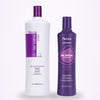
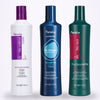
The best purple shampoo, and the best toning shampoo, is the one matched to the tone your hair is actually showing. Violet cancels yellow, blue cancels orange and green cancels red. So Fanola No Yellow Shampoo is the one for blonde and grey hair turning brassy-gold, Wonder No Orange is for orange and copper, and No Red is for red warmth in brown hair.
What makes the best purple shampoo for your hair?
Four things decide it: the tone you are neutralising, how light the hair already is, how porous it is, and how often you want to tone. Size and format follow from those.
If you are new to toning, start with how purple shampoo works on the hair. The rest of this guide builds on it.
A toning shampoo is your maintenance step between colour appointments. It cleanses and deposits a light, washable tone in one go, which makes it ideal for keeping colour fresh week to week. It does not lighten hair, because there is no peroxide and no developer in the bottle.
Choose for the tone. Violet on genuinely orange hair reads muddy rather than cool, because violet is the complement of yellow, not orange. Getting this one decision right is the key to a great result.
Which pigment does your hair need?
Look at the hair in daylight, not in a bathroom mirror under a warm bulb. Yellow or gold? You want violet. Orange or copper? You want blue. Red or warm chestnut? You want green.
Those three pairs are the basis of the whole toning shelf, and they are why our ranges are named after the tone they cancel rather than the colour in the bottle.
| Toning shampoo | Pigment | The hair it is for | Leave-on time |
|---|---|---|---|
| Fanola No Yellow Shampoo | Violet (Acid Violet 43) | Blonde, bleached, highlighted or grey hair turning yellow or gold | A few minutes; longer for a deeper tone |
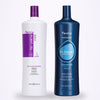
| Fanola Wonder No Yellow Shampoo | Violet (Acid Violet 43) | The same yellow tones, in our more conditioning Wonder formula | 1–5 minutes, once or twice a week |
| Fanola Wonder No Orange Shampoo | Blue | Light brown to dark blonde hair pulling orange or copper | 1–5 minutes, twice a week for best results |
| Fanola No Red Shampoo | Green | Brown and chestnut hair going red or warm through oxidation | 1–5 minutes, wearing disposable gloves |
Level and porosity: the pro detail
Level matters as much as tone. Violet needs yellow to neutralise. At a very pale level 10 there is barely any, so extra violet shows up straight away as lilac or grey. On a mid-blonde carrying more yellow-gold, the same amount is used up neutralising.
So the palest, most carefully lifted blondes tone fastest. Start them on the shortest time.
Porosity works the same way along a single head. Bleached ends take and hold more pigment than mid-lengths, so they go cool first.

Four things to check before you buy
Pigment
Hairdressers on the trade forum SalonGeek describe Fanola No Yellow as among the most heavily pigmented purple shampoos they have used. Rich pigment gives a visible result in a short time, which is why timing is the skill to learn.
Shampoo, mask or foam
A mask deposits more evenly than a shampoo, because it is not cleansing and depositing at the same time. It is the better choice when the hair needs more pigment or the ends are patchy. A shampoo is the right tool for light, frequent upkeep.
For fine hair, our Fanola No Yellow Incredible Foam carries Acid Violet 43 in a lighter texture. Apply it after shampooing to towel-dried lengths and ends, leave it 3 to 5 minutes, then rinse it out. It is a rinse-off treatment, not a leave-in.
Classic No Yellow or Wonder
Our Wonder No Yellow formula delivers the same neutralising performance as classic No Yellow. The difference is in the conditioning, not the toning, so this is a choice about how your hair likes to feel. Classic No Yellow vs Wonder No Yellow compares them side by side.
Bottle size
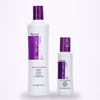
The classic No Yellow and classic No Red shampoos come in 100ml, 350ml and 1000ml, and Wonder No Yellow in the same three. Wonder No Orange and Wonder No Red start at 350ml.
If you have never used a richly pigmented shampoo, start with the 100ml where there is one, and learn your timing on it. Move to the litre once you know how your hair responds. How to use purple shampoo covers getting the timing right from the first wash.
When to book a colourist instead
A toning shampoo refines tone on hair that has already been lightened. It does not change the hair's level, and it applies the same amount everywhere, so it will not even out banding. If hair is orange because it was under-lifted, it needs lightening first, and that is a salon job.
The same goes for a change of tonal direction, any colour correction, and hair that is already chemically compromised. If the tone you want to shift is brassy gold on blonde hair, though, this is exactly what toning shampoo does best. The best purple shampoo for brassy blonde hair goes into it in detail.
Strand-test before you do the whole head. Take a small section underneath, treat it for the shortest time on the pack, rinse and dry it. That shows you exactly how your hair takes the pigment, and porous ends will get there faster than the rest.
Wear gloves. Our instructions for our toning shampoos say to wear appropriate gloves. These are working pigments, and they will mark hands, towels and grout if you let them sit.
About No Yellow
Fanola is an Italian professional haircare brand, made by Pettenon Cosmetics in San Martino di Lupari. No Yellow is the product that made us famous. It was already a professional favourite when it went viral on social media in 2016, and it has stayed a before-and-after staple ever since.
For a fuller look at what it does and how to get the best from it, read is Fanola No Yellow any good?

Common questions
What purple shampoo do hairdressers recommend?
Colourists choose by the client's level, porosity and how often they will tone at home. Fanola No Yellow started life as a professional salon product, and it was already a favourite with hairdressers before it reached a wider audience.
Should I buy Fanola No Yellow or Fanola No Orange?
Look at the unwanted tone. Yellow and gold on blonde or grey hair is a violet job, so No Yellow. Orange and copper on light brown to dark blonde hair is a blue job, so Wonder No Orange. Violet on genuinely orange hair tends to look muddy rather than cool.
Is silver shampoo the same as purple shampoo?
Usually, yes. "Silver", "purple", "violet" and "blonde" shampoos are names for the same idea: a violet direct dye in a cleanser. Our guide to silver shampoo vs purple shampoo explains the difference in naming.
When should you not use purple shampoo?
Skip it for orange or red warmth (use blue or green instead), for banding, and on hair you want to make lighter. On very pale or white hair, strand-test first. If the hair starts reading grey or lilac rather than clean, pause the toning: the violet washes away over subsequent shampoos.
Do I need gloves to use a toning shampoo?
Yes. Our instructions for our toning shampoos say to wear appropriate gloves. The richer the pigment and the longer you leave it on, the more likely it is to mark your hands.
Where to start in our shop
Pick the pigment that cancels the tone you have, then the size you will use.
Fanola No Yellow Shampoo 350ml: violet, for yellow and gold →
Fanola Wonder No Orange Shampoo 350ml: blue, for orange and copper →
Fanola No Red Shampoo 350ml: green, for red →
Sizes were correct in our shop at the time of writing. Always follow the instructions supplied with the product, strand-test before treating a whole head, and if you are unsure about a colour service, speak to a professional colourist.
Shop the range: browse our No Yellow range and our colour toning range.
-
Posted in
Buyer guide, Choosing and comparing, Fanola No Yellow, Purple shampoo, Toning