Silver Shampoo vs Purple Shampoo: Is There a Difference?

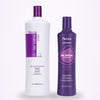
Silver shampoo and purple shampoo are two names for the same idea: a shampoo carrying a violet pigment that cancels unwanted yellow. The silver-named shampoos we checked all declare a violet dye on their ingredient lists, the same dye family as purple shampoo. Ours is called No Yellow, and it is made for blonde, grey and bleached hair.
Silver shampoo vs purple shampoo: the short answer
The two names describe different things. Purple shampoo describes what is in the bottle: a shampoo carrying a violet direct dye. Silver shampoo describes the result you want: bright, cool blonde or clean silver-grey.
Neither phrase is a regulated category, so the same formula can be sold under either word. That is why the two shelves overlap so completely. If your hair is naturally grey or white rather than bleached, our guide to purple shampoo for grey hair goes deeper.
What does a silver shampoo actually contain?
Violet dye. On the silver-named shampoos we checked in September 2026, the colourant on the ingredient list was a violet, most often Acid Violet 43. You will also see it written as CI 60730 or Ext. Violet 2: three names for the same colourant.
Acid Violet 43 is the dye in our own Fanola No Yellow Shampoo. So when you compare a silver shampoo with a purple one, you are usually comparing the same pigment in a different bottle.

The pigment does the work, not the name
Violet sits opposite yellow on the colour wheel, which is why a violet dye makes yellow read as neutral rather than golden. Blue sits opposite orange and green sits opposite red, and the same logic runs through the whole toning shelf. We explain the mechanism in how purple shampoo works.
It also tells you what to expect. A toning shampoo deposits pigment; it does not lift. There is no developer and no peroxide in the bottle, so it refines the tone of hair that has already been lightened. If your hair is orange rather than yellow, or needs to go lighter before it can be toned, that is a job for your colourist.
Where the two names can differ
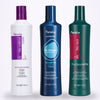
Some silver-named shampoos blend a blue with the violet. That makes them a slightly different tool, because blue targets orange rather than yellow. If you are not sure which tone you are dealing with, read blue or purple shampoo before you choose.
Some silver-named products are aimed squarely at grey and white hair. That matters more than the name, because white hair takes violet differently from bleached blonde (more on that below).
Choose on what you can check, not the word on the bottle. Look at which dye the ingredient list declares, whether the tone you are correcting is yellow or orange, and how quickly your hair takes pigment. Get those three right and the result follows.
Is our No Yellow a silver shampoo?
In everything but the name, yes. If you have been searching for a Fanola silver shampoo, No Yellow is the one you are looking for. It neutralises yellow tones in blonde, grey and bleached hair using violet pigment, with Acid Violet 43 on its ingredient list.
Hairdressers on the trade forum SalonGeek describe No Yellow as among the most heavily pigmented purple shampoos they have used. That rich pigment is exactly why it delivers a visible result, and why a few simple habits get the best from it.
- Wear gloves. Our instructions for No Yellow Shampoo say to wear appropriate gloves. Violet pigment marks fingers, nails, towels and grout, and it is far easier to prevent than to remove.
- Strand-test first. If you are toning for the first time, try a hidden section before you do the whole head.
- Watch the timing. Our guide on how to use purple shampoo covers leave-on times step by step.
Pro tip for white hair: less is more. Bleached blonde still holds warm pigment for violet to neutralise. Truly white hair holds very little, so any extra violet shows as violet. That is why white and light grey hair can tip lilac faster than blonde, and why a shorter, lighter, less frequent application is the technique to use.
Can you use both?
There is no benefit in owning two violet shampoos under two names. Stick to one, so you can learn exactly how your hair responds to it.
Two pairings are worth having. The first is a violet shampoo with a violet mask, which keeps the toning going while giving the hair extra conditioning. Our Fanola No Yellow Mask carries the same Acid Violet 43 as the shampoo. For more on looking after toned hair, see our guide to keeping toned hair soft and healthy.
The second is a violet product for yellow plus a blue-pigmented one for orange, because those are two different tones with two different complements.

Our recommendation
Choose by the tone in front of you, not by the word on the front of the bottle. If you are correcting yellow (pale blonde, highlights, grey or white going brassy), a violet shampoo is the right tool, whether it is sold as silver, purple, anti-yellow or blonde-brightening.
If the tone is orange, you need blue pigment instead. If your hair is white or very light grey, prioritise control: short contact times and less frequent use. Our guide on how to choose a toning shampoo walks through every step.
Common questions
Is silver shampoo the same as purple shampoo?
In practice, almost always. Silver shampoo is a description of the result; purple shampoo is a description of the liquid. The silver-named shampoos we checked all declared a violet dye, often the same Acid Violet 43 our No Yellow Shampoo uses.
What does silver shampoo do to your hair?
It deposits a small amount of violet dye on the outside of the hair. Violet sits opposite yellow on the colour wheel, so yellow reads as neutral instead of golden. Nothing is lightened: the effect is added colour, and it washes away over subsequent shampoos.
Is silver shampoo better than purple shampoo?
The name does not decide it, because they are not competing categories. A silver-branded and a purple-branded shampoo can carry the identical dye. Compare the declared colourant, the format and how much control the product gives you over contact time.
Does Fanola make a silver shampoo?
Our violet shampoo is called No Yellow, and it is made for blonde, grey and bleached hair. If you have been searching for a Fanola silver shampoo, No Yellow is the product you want, and the No Yellow Mask is its toning partner.
Can silver shampoo lighten hair?
No. A toning shampoo carries a preformed dye with no developer, no peroxide and no ammonia, so it adds pigment rather than lifting it. Hair that needs to be lighter before it can be toned needs a colourist first.
Our violet range
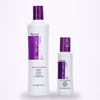
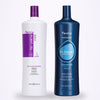
The classic No Yellow Shampoo comes in three sizes, alongside a mask carrying the same violet dye. Our Wonder line adds a second No Yellow shampoo, with the same Acid Violet 43 in a more conditioning formula.
Fanola No Yellow Shampoo 1000ml, the salon size →
Fanola Wonder No Yellow Shampoo 350ml →
Ingredient lists were checked in September 2026, and formulations change. Always follow the instructions supplied with your product, and speak to a professional colourist if you are unsure about a colour service.
Shop the range: browse our No Yellow range.
-
Posted in
Comparison, Grey, No Yellow, Purple shampoo, silver and white hair, Toning