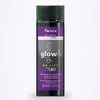
Does Fanola Shampoo Damage Hair? What the Ingredients Show

No study has shown that Fanola shampoo damages hair. Fanola No Yellow Shampoo is a violet direct dye, Acid Violet 43, in a sodium laureth sulphate base, and Fanola's published ingredient list contains no peroxide or ammonia. On lightened hair, the measured structural damage comes from bleaching; one lab study of plain detergent found more protein loss than with water, and more on already-damaged hair. The commonest complaints people raise about toning shampoos are dryness and over-toning (a blue or violet cast).
We have found no independent test of Fanola's shampoos on hair, so this works from Fanola's own product pages and the research on shampoo, sulphates and bleach. Where evidence is thin, we say so. For the colour side, our guide to how purple shampoo works covers the mechanism.
Does Fanola shampoo damage hair? Start with what is in the bottle
Fanola's own pages list the full ingredients for each shampoo. The table copies the cleansing agents in Fanola's order, plus the colourant and other notable ingredients.
| Shampoo | Cleansing agents listed by Fanola | Colourant and other notable ingredients | Fanola's directions |
|---|---|---|---|
| Fanola No Yellow Shampoo | Sodium Laureth Sulfate, Sodium Cocoamphoacetate, Decyl Glucoside, Cocamidopropyl Betaine | Acid Violet 43 (violet dye); Guar Hydroxypropyltrimonium Chloride; wine extract | Wear gloves, apply to wet hair, massage, leave "a few minutes", lather and rinse |
| Fanola Wonder No Yellow Shampoo | Sodium Laureth Sulfate, Sodium Cocoamphoacetate, Decyl Glucoside, Cocamidopropyl Betaine | Acid Violet 43 (violet dye); Polyquaternium-7, Guar Hydroxypropyltrimonium Chloride, Polyquaternium-16; marula seed oil | Wear gloves, apply to wet hair, massage, leave 1 to 5 minutes, lather and rinse |
| Fanola Nourishing Shampoo | Sodium Laureth Sulfate, Sodium Cocoamphoacetate, Sodium Myreth Sulfate, Cocamidopropyl Betaine, Coco-Glucoside | No colourant; hydrolysed wheat protein, hydrolysed milk protein, Guar Hydroxypropyltrimonium Chloride | Apply to wet hair, massage thoroughly, rinse |
| Fanola Wonder Nourishing Shampoo | Ammonium Lauryl Sulfate, Sodium Myreth Sulfate, Sodium Cocoamphoacetate | No colourant; cocoa seed butter, Guar Hydroxypropyltrimonium Chloride | Apply to wet hair, massage gently, rinse |
Two things stand out. First, every one of these four shampoos is built on sulphate surfactants: sodium laureth sulphate in three, ammonium lauryl sulphate and sodium myreth sulphate in the fourth. Second, none of the four lists hydrogen peroxide, ammonia or any other ingredient that lightens hair. The violet in the No Yellow pair is Acid Violet 43, a ready-made direct dye from the same family as semi-permanent colour. It needs no developer, and it does not lighten.
The EU ingredient database labels sodium cocoamphoacetate and cocamidopropyl betaine with a "hair conditioning" function: a regulatory label, not a performance test, but these are not bare detergent formulas.

What can a shampoo actually do to the hair fibre?
Not nothing, though the measured effects come from lab conditions, and in one study they were larger on already-damaged hair. The hair shaft is non-living keratin with no known way to repair itself, so the question is whether a wash causes measurable change.
- Protein. In one lab study, read at abstract level, hair in a plain sodium lauryl sulphate solution (5% in the soak tests) lost about twice as much protein as hair in water when soaked, and about seven times as much under friction. The authors report that more damaged hair lost more protein. That was a plain detergent at 25 to 70 °C, not a finished shampoo.
- Internal structure. One independent X-ray study washed hair once in a laureth sulphate shampoo and saw no change in the keratin or lipid structure inside. One donor; small losses could fall below detection.
- Lipids. In one 1979 industry study (abstract only, conditions not stated), a single wash removed on average about half of the hair's readily extractable free lipid, and repeat washes kept removing more.
- Friction. Two reviews say shampooing and grooming friction may wear the cuticle layers and the cement between cells, but give no figures. No verified study quantifies it for ordinary washing.
Compare that with lightening. In lab bleaching of human hair, Grosvenor and colleagues (2018, partly Unilever-funded, abstract level) found that bleach converts cystine bonds to cysteic acid, mainly in the cortex, with protein loss rising as the bleaching got stronger. Fanola's No Yellow shampoos list none of the ingredients that cause it.
The useful comparison. Measured damage on blonde hair has a clear cause in bleaching. For shampoo, the evidence shows smaller, conditional lab effects, larger on already-damaged hair. If blonde hair is snapping, look at its colour history before blaming the shampoo.
Do sulphates damage hair?
This belief sits behind most "is it bad for my hair" worries.
Why people believe it
There is a real kernel. Sodium lauryl sulphate is the classic strong detergent. In one skin patch study (abstract only), it irritated more, and for longer, than sodium laureth sulphate or an alkyl polyglucoside cleanser. In one manufacturer's patent test on dyed hair, sulphate-based washes faded colour more than plain water did.
What the evidence supports nearby
In that same patent test, plain water alone caused about 70% of the colour change the sulphate wash caused over 21 washes, with one tress per arm. Washing itself fades colour. We have found no independent study comparing finished shampoos with and without sulphate surfactants, at matched strength on real hair, for fade or damage; the nearest is an unreviewed poster of plain-solution soaks. The popular claim that sulphates "strip" the hair's surface lipid (18-MEA) could not be traced to a primary source. The one direct measurement we found, an industry study, saw no significant change after laureth sulphate washes.
The patch-test gradient also matters here. Fanola's No Yellow shampoos list sodium laureth sulphate, the one that irritated less in that study, not sodium lauryl sulphate. Wonder Nourishing, which Fanola suggests alternating with, uses ammonium lauryl sulphate instead, which that study did not test. That is skin data from one study, so treat it as a pointer, not proof of anything about your scalp.
What to do with that
Judge a shampoo by how your hair and scalp respond, not by one word on the label. If your scalp itches or stings after any shampoo, stop using it. If your lengths feel rough, Fanola's own suggestion is a conditioning step after the wash (No Yellow Mask) rather than a different shampoo.
Is purple shampoo bad for your hair, or does it just feel dry?
Dryness is the complaint people raise most often. We found no study measuring why some find toning shampoos drying, so treat any single explanation with caution. A purple shampoo is still a full cleansing wash, and blonde hair has usually been bleached too.
Fanola's page for No Yellow Shampoo suggests alternating it with Wonder Nourishing Shampoo and following it with No Yellow Mask "for more softness and shine". Fanola's mask directions: disposable gloves, towel-dried lengths and ends, 3 to 5 minutes, rinse. See Fanola No Yellow Mask 350ml and the Wonder Nourishing range.
If softness is the main worry, Fanola positions Wonder No Yellow Shampoo as giving the same neutralisation as the classic shampoo with more softness. It cites its own in-salon self-assessment tests, so read that as a manufacturer claim. Our No Yellow versus Wonder No Yellow comparison sets the two side by side.
Over-toning is the other complaint, and it is a colour effect rather than damage. Industry patents describe results going "too blue or violet", though no study has measured it on hair with instruments. Toning brands say more dye deposits the longer it stays on, so contact time is the thing to adjust; how to use purple shampoo covers the routine.

Gloves on, strand test first. Fanola's directions for both No Yellow shampoos say to wear suitable gloves. On very pale or heavily processed hair, try a hidden section first to see how fast your hair takes the violet.
When is it not the shampoo at all?
When the hair is stretching, gummy when wet, or snapping. That is a salon job, and no shampoo can repair it. Colourists on the SalonGeek forum warn clients off chasing a completely yellow-free result, because removing more yellow means more lightening, and lightening is the damaging step. Never bleach at home to fix a tone you dislike.
Brittle or breaking hair can also have medical causes. If breakage carries on after you have stopped chemical services, see a GP or a dermatologist.
Common questions
Does purple shampoo damage hair?
No study we have found shows that it does. A purple shampoo deposits a ready-made violet dye from a cleansing base, and Fanola's No Yellow ingredient lists contain no oxidant. We have not found research testing whether direct dyes alone change the fibre, so the honest answer is no evidence of damage, rather than proven harmless.
Why is my hair so dry after purple shampoo?
We found no study measuring why, so be wary of confident answers. A purple shampoo is still a cleansing wash, and industry studies show washing removes some of the hair's own free lipid. Fanola's page for No Yellow suggests alternating it with Wonder Nourishing Shampoo and following it with No Yellow Mask "for more softness and shine".
Is purple shampoo safe on already-damaged bleached hair?
The bleach is what measurably damaged the hair; Fanola's No Yellow shampoos add a dye deposit, not an oxidant. The practical risk is colour, because one 1987 industry patent, judging by eye, saw violet dye deposit far more on bleached white hair than on unbleached. Strand-test first, follow Fanola's directions, and see a colourist if the hair is stretching or snapping.
Does purple shampoo cause breakage over time?
We have found no study linking toning shampoo to breakage, but not finding a study is not proof it is harmless. Breakage on blonde hair has a measured cause in bleaching: in one industry-run lab study, machine-combed 5,000 times dry, bought pre-bleached hair shed about three times as many fragments as untreated hair (six tresses per set; the authors call the gap modest). Persistent breakage is worth raising with a GP.
Is Wonder No Yellow gentler than the original?
Fanola says Wonder No Yellow gives the same neutralisation as the classic shampoo with more softness, citing its own in-salon self-assessment tests. Its ingredient list keeps the same four cleansing agents and adds polyquaternium polymers and marula oil. That is a manufacturer claim, not an independent test, and gentleness has not been measured.
The No Yellow shampoos and their care partners
Tone with the shampoo, then condition. Prices are correct at the time of writing and can change.
Fanola No Yellow Shampoo 350ml, £6.73 →
Fanola Wonder No Yellow Shampoo 350ml, £7.41 →
The full No Yellow care range →
Always follow the instructions supplied with the product, and strand-test before a first use on very pale or processed hair. If your hair is breaking or you are unsure about a colour service, speak to a professional colourist.