How to Remove Red Tones From Brown Hair at Home

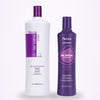
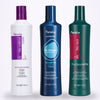
To remove red tones from brown hair at home, use a green-pigmented toning shampoo or mask such as our Fanola No Red or Wonder No Red. Green is the colour hairdressers use against red: it neutralises the red reflect by adding cool pigment, leaving a cooler, more natural-looking brown. For old red dye or patchy, banded red, a salon colour correction comes first.
For the green range itself, see our guide to green shampoo for red tones.
Why brown hair shows red in the first place
Brown hair holds warm pigment under the brown, and any lightening (bleach, a bleach bath, or a permanent colour lighter than your own) exposes it. Salon lightening charts show medium and light brown hair revealing reddish-brown and reddish-orange warmth as they lift.
Hairdressers use the term level for how light or dark the hair is, on most charts from 1 (black) to 10 (lightest blonde). Whatever the numbering, the order is always the same: red, then orange, then yellow. Everyday life plays a part too. Red tones can build through oxidation from sun exposure, heat and chemical treatments.
How a green shampoo or mask works
Red and green sit opposite each other on the colour wheel, and opposite colours neutralise one another. Our No Red Shampoo builds its green from a balanced blend of blue, brown, yellow and red dyes. Two things follow:
- It adds pigment. No Red is a direct-dye product with no peroxide or other oxidant, so it doesn't lighten hair or strip dye. When two opposite pigments meet, the result is a deeper, more neutral shade. Expect a cooler brown, very slightly deeper, never a lighter one.
- It's maintenance. Deposited pigment gradually washes out, so regular use keeps the red in check.
First, check the colour really is red. Ginger, copper and rusty tones are orange, which calls for blue: see how blue shampoo deals with orange.
How to remove red tones from brown hair at home, step by step
- Diagnose in daylight, not bathroom light.
- Strand test a small section underneath for the shortest time on the pack, then rinse and dry it.
- Gloves on, hair thoroughly wet. Wear disposable gloves during application; the pigment can mark towels and grouting too.
- Work it into the red areas, focusing on the mid-lengths and ends.
- Time it, starting short. You can go longer next wash.
- Rinse until the water runs clear, then follow with the mask on towel-dried hair if you are using one.
- Judge it dry, over a few washes, rather than from one wet result.
Here are the leave-on times for each product. Always follow the pack in your hand, and start at the short end.
| Product | Leave-on time | Where it goes |
|---|---|---|
| No Red Shampoo (100ml, 350ml, 1000ml) | 1 to 5 minutes | Wet hair, as part of the wash |
| No Red Mask (100ml, 350ml, 1000ml) | 3 to 5 minutes | After the shampoo |
| Wonder No Red Shampoo (350ml, 1000ml) | 1 to 5 minutes | Wet hair, as part of the wash |
| Wonder No Red Mask (350ml, 1000ml) | 3 to 5 minutes | After the shampoo |
For Wonder No Red, we recommend the shampoo 1 to 2 times a week and the mask once a week or as needed.

Pro tips for an even result
Want a stronger result: healthy dark hair takes pigment gradually, so build up over a few washes, or follow the shampoo with the Fanola Wonder No Red Mask 350ml as our routine does. One section took more than the rest: bleached highlights and porous ends absorb dye faster, so keep the product off them or shorten the time. Still looks warm: the tone may be orange rather than red, which calls for blue.
When removing red is a salon job
A toning shampoo works with the level and colour you already have. These need a colourist:
- Old red dye that has built up over months. Toning cools the reflect while the dye stays in. Taking out artificial colour is a removal service, designed for permanent (oxidative) dye rather than your natural pigment, so the warmth underneath still needs toning afterwards.
- Banded red, darker at the root and redder through the lengths. A shampoo deposits most where hair is most porous, which is not necessarily where the red is.
- Wanting to be lighter and cooler at once. Every lift on brown hair exposes more red-orange before it reaches yellow, so the toning follows a lightening plan.
Pro tip: skip the home bleach bath. A bleach bath is diluted lightener, and on brown hair lightening exposes red and orange warmth. Done at home without strand tests, it can leave brown hair redder than before. It is a salon colour-correction tool, used with a plan for toning afterwards.
If your hair has ever had henna or a metallic-salt dye, tell the colourist before any lightening. These react unpredictably with peroxide.
What the colourist usually does is re-colour at your target depth with a shade carrying a green or blue tone: blue reads as ash and green as matt. For stronger cases, colourists use a bluish-green toner for the reddish-orange left in bleached dark hair. Expect a strand test first, and an allergy alert test before the colour, carried out as the pack leaflet directs.
Keeping the red from coming back
Alternate the green shampoo with your usual one, and follow it with the mask, as our routine does, for extra hold. The Fanola Wonder No Red Shampoo 350ml is a lovely place to start. Our classic Fanola No Red Shampoo 350ml and No Red Mask do the same job; Fanola No Red vs Wonder No Red helps you choose between them.
Common questions
Why does my hair turn red when I dye it brown?
Often because the shade is lighter than your own colour. Permanent colour can lighten your natural pigment as it colours, and that lightening exposes the warm pigment underneath. If the shade's own tone isn't cool enough to balance it, the result reads red. A colourist would pick a shade with an ash or matt tone for this.
Does green shampoo remove red hair dye?
It cools it rather than removing it. Our No Red shampoo contains no oxidant or colour-removing agent; it adds pigment that makes a red reflect look less red. Red dye from a box or salon stays in the hair until it fades or a colourist removes it.
Can I get red tones out of brown hair without bleach?
You can neutralise a red reflect without bleach, with green toning products, and that is the safe home option. Removing the warm pigment itself takes lightening, which exposes more red first, so that belongs with a colourist.
Will green shampoo turn my hair green?
We make No Red for brown and chestnut hair, and Wonder No Red for dark tones. Any toning pigment shows most where there is little warmth for it to balance and where hair is most porous, so take care on bleached highlights, very light sections and porous ends. A strand test and a short first application keep you in control.
The green toning range
Always follow the instructions supplied with the product. Strand-test before a first use, wear gloves with pigmented products, and speak to a professional colourist about any colour correction.
Shop the range: browse our Wonder No Red range.
-
Posted in
Brown hair, Green shampoo and red tones, How to, No Red, Toning