Anti-Red Shampoo for Brunettes: What It Does and Who It Suits

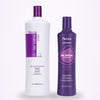
An anti-red shampoo for brunettes is a toning shampoo built on green pigment, which sits opposite red on the colour wheel. It deposits a cool cast that counteracts red and mahogany reflects in brown hair. Our No Red Shampoo is made for exactly this job: it tones the red out of view and leaves your depth exactly where it is.
The key to a great result is reading the warmth correctly. Warm brown can read red, orange or a mix of both, and each takes a different pigment. The colour theory is in our green shampoo guide for red tones; this piece is about which brunettes it suits and how to get the most from it.
The short answer for a brunette choosing a bottle
Reach for green if your brown hair looks red, mahogany or auburn in daylight: through the ends, in summer, or a few weeks after a brown colour. Green is its opposite, so it cools that warmth straight back.
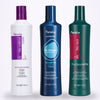
If the warmth reads ginger, copper or orange, choose blue instead. Our pro tip: photograph your ends in daylight against a white towel. Brick red takes green; satsuma takes blue.

Our anti-red range for brown hair
| Product | Targets | Best for | How to use |
|---|---|---|---|
| Fanola No Red Shampoo | Red reflects in brown and chestnut hair, coloured or natural | A regular toning wash on mid to dark brown | 1 to 5 minutes on wet hair, then lather and rinse; wear disposable gloves |
| Fanola No Red Mask | The same green-toned pigment in a conditioning base | Dense, low-porosity dark hair that benefits from contact time | 3 to 5 minutes on towel-dried hair, mid-lengths and ends |
| Fanola Wonder No Red Shampoo | Red and copper reflects on natural or colour-processed dark hair | Brunettes who want softness and shine alongside toning | 1 to 5 minutes on wet hair; see Fanola No Red vs Wonder No Red |
How our green is built. The colour in No Red Shampoo is a blend: HC Blue No. 15 with Basic Yellow 87, which together read as green, shaded with Basic Brown 17 and Basic Red 76.
What does an anti-red shampoo do to brown hair?
It leaves a fine layer of pigment on the outside of the hair, and that pigment absorbs part of the light your hair would otherwise reflect as red. The result is a cooler, richer brown. Nothing is lifted, so your depth stays the same.
Because it is a deposit, it fades gradually with washing, faster on porous hair. Regular use keeps the cool cast in place. Brown hair turning red is simply hair behaving normally, and the full home routine is in how to remove red tones from brown hair at home.
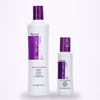
For timings, follow the pack. No Red Shampoo 350ml: one to five minutes on wet hair before lathering and rinsing, wearing disposable gloves. No Red Mask 350ml: three to five minutes on towel-dried hair.
The deciding factor is the tone. Red and mahogany take green; orange and ginger take blue; yellow takes violet. Get that call right and you will see the cool, polished brown you are after.
Anti-red shampoo for brunettes: who it suits
Four groups of brunettes get a great result from green pigment.
Natural brunettes whose hair warms in the sun
Dark hair oxidises with sun and heat, and by late summer that shows as a red or mahogany cast. This is exactly the hair No Red is made for.
Brown colour that has faded warm
Brown colour fades back towards the warmth underneath it, and under dark hair that warmth is red first. A weekly anti-red wash between appointments keeps the cool cast in place while the colour fades.
Brunettes lightened a level or two
Lift a dark brown slightly and the pigment exposed underneath is red or red-orange, which is why a partial lift can read auburn when the goal was ash brown. Green takes care of the red. Once that warmth moves into clear orange, switch to Wonder No Orange Shampoo 350ml, and see our guide to fixing orange hair after bleaching.
Anyone maintaining a cool or ash brown
Cool brown takes a little upkeep, because sun, heat and washing all push it warm. Regular toning holds it, and this is where the mask earns its place: dark hair is often less porous than blonde, so the extra contact time helps the pigment register.

Pro tips before you start
- Match the pigment to the warmth. Green is for red. On orange it gives a flat, muddy brown, so orange warmth goes to blue.
- Strand test grey or white hair first. There is no underlying warmth on white hair for the green to cancel, so the pigment can show as a green cast, and grey often takes direct dye unevenly. Greying brunettes should test their greyest section first.
- Treat lightened sections separately. Old highlights, balayage ends and over-processed lengths are porous and take pigment fast. Strand test them on their own and keep their contact time short.
- Toning softens a reflect; it does not remove a dye. An old red colour you want gone, or hair that has had henna or a metallic-salt dye, is a conversation for your colourist first.
Wear gloves and strand test. Our No Red directions call for disposable gloves, because richly tinted products mark skin, nails and towels. Test a hidden section first, especially on grey, highlights or porous ends.
A green cast that appears after swimming is a different issue: it comes from copper in pool or tap water bound into the hair, and a chelating shampoo is the usual answer.
Can you use it alongside purple or blue shampoo?
Yes, on separate washes. A brunette with lightened face-framing pieces may want two: green for the red-toned base, violet for the yellow in the lightened sections. Alternate them and keep an eye on your ends.
An anti-red shampoo is a toning product, not a lightener, even though both can be green. Our guide to green lightener vs green shampoo explains how they do different jobs.
Our recommendation
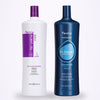
If your brown hair reads red or mahogany in daylight, start with our No Red Shampoo: one to five minutes, gloves on, once a week. Add the No Red Mask if your hair is dense and needs more contact time to hold the tone. For the salon or a long-term routine, No Red Shampoo 1000ml is the litre size.
If your hair reads orange, choose blue. If it is grey or white, strand test first, and if the red is an old permanent colour, book in with your colourist.
Common questions
Will an anti-red shampoo work on natural brown hair that has never been coloured?
Yes. No Red is made for coloured and natural hair alike. You will see a cooler reflect rather than a change of shade: your hair will not get lighter or darker, only less warm.
Can green shampoo turn my brown hair green?
On healthy mid-brown hair, no. The base is far too dark for the pigment to show as green. Take care on white, grey, lightened or porous sections, which take pigment fast; that is what the strand test is for.
How often should a brunette use an anti-red shampoo?
Follow your pack. Our Wonder No Red guidance is one to two times a week, and weekly is a sensible place to start with either line. Move to twice a week if the red returns between washes.
Does anti-red shampoo work on black hair?
It can counteract a red reflect on very dark hair, which often shows as black colour fades. Hair that dark reflects very little light, so expect a subtle refinement of tone rather than a dramatic cool shift.
Always follow the instructions supplied with the product. Strand-test before a full application, and speak to a professional colourist if you are facing a colour correction.
Shop the range: browse our products for brown hair.
-
Posted in
Brunettes, Comparison, Green shampoo and red tones, No Red, Toning