How to Fix Orange Hair After Bleaching

Orange hair after bleaching is under-lifted hair, so the fix depends on how orange it is. A light warm cast can be cooled at home with a blue-pigment wash such as our Fanola Wonder No Orange Shampoo. Deep, copper orange needs more lift, which means a salon appointment. Remember the rule: blue cancels orange, violet cancels yellow, and green cancels red.
How do you fix orange hair after bleaching?
Before you choose a fix, look at your hair dry and in daylight. Wet hair under a bathroom light reads warmer and darker than it really is. Then work down the steps below, gentlest first. Orange is cancelled by blue, not by violet, and that is exactly what a no orange shampoo is designed for.
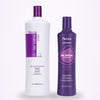
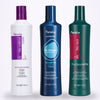
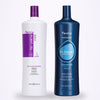
- Wash with a blue toning shampoo. Fanola Wonder No Orange Shampoo 350ml is our blue-pigment wash. Wear gloves, massage it into wet hair, leave it on for 1–5 minutes and rinse, twice a week. Start at one minute and judge the result once the hair is dry.
- Add a blue mask on porous ends. Bleached ends are more porous than mid-lengths and take pigment faster. Fanola Wonder No Orange Mask 350ml goes on towel-dried hair after shampooing for 3–5 minutes. It is potent, so use it sparingly, once a week.
- Leave a few days between toning washes. Blue pigment deposits every time you use it, so spacing your washes keeps the tone cool rather than grey-blue.
- For deep, copper orange, book a colourist. A toning shampoo deposits pigment and contains no oxidising agent, so it cools the tone rather than lightening the hair. Lift is a salon job.
Pro tip: keep the purple shampoo for later, and don't re-bleach this week. Violet is the opposite of yellow, not orange. On genuinely orange hair it pushes the tone towards a muddy brown. Re-bleaching freshly lightened hair at home risks breakage, so leave further lift to your colourist.
Blue makes orange cooler, not blonder
On the colour wheel, orange plus blue makes brown. Toning doesn't take anything away. It lays a second pigment over the first, so a well-neutralised orange reads cooler, deeper and more neutral rather than lighter.
A blue wash turns brassy orange into a cooler, more neutral brown-blonde, and for many people that is the look they want. If you want pale blonde, the route there is more lift, followed by toning. Why the bleach stopped where it did is explained in why hair turns orange after bleaching, and the full colour wheel is in what colour cancels out orange in hair.
| What you are looking at | Most likely cause | What fixes it | Role of a blue toning wash |
|---|---|---|---|
| Even orange all over, there the day the bleach was rinsed | The lightener stopped in the orange band | Further lifting, then a toner, at a salon | Cools the tone in the meantime |
| Orange at the roots, paler through the lengths | Scalp heat lifted the root faster than the rest | Root-specific re-application by a colourist | A colourist's job, because a shampoo tones every zone equally |
| Cool when you left the salon, warm three to six weeks later | The toner faded and revealed the level underneath | Re-tone at the backwash, with a blue wash in between | Ideal, as maintenance between appointments |
| Dull warm cast, worse in a hard-water house or after swimming | Mineral build-up, which bleached hair picks up more readily | A chelating wash first, then judge the tone again | Use it after the chelating wash, once the minerals are gone |

Our timings at a glance. Wonder No Orange Shampoo: 1–5 minutes, twice a week. Wonder No Orange Mask: 3–5 minutes, once a week. Even on very orange hair, treat five minutes as the ceiling rather than the starting point.
How quickly will you see a difference?
On a light warm cast, the first blue wash usually shows a difference, because the pigment deposits on the surface straight away. Toning shampoo is a direct dye with no developer, so it fades gradually with each wash and you top it up as part of your routine. That also means any over-toning is easy to correct.
Where the hair is under-lifted, the orange is the hair's own lifted level, and toning keeps it in check between salon visits. Colourists often stage a full correction across more than one appointment, and your blue wash maintains the tone in between.
When does orange hair need a colourist?
Book a colourist if the orange is deep and coppery rather than a light cast, if it is banded with different shades along the strand, if the hair was previously henna'd or box-dyed dark, or if it feels gummy when wet. A salon can lift again with control and then tone at the right level.
Professional lighteners are built for this. In our Fanola No Yellow Color Blue Lightener, blue pigment in the powder neutralises unwanted orange tones while the hair lightens. It's a professional product for the salon. Our Fanola salon toners are oxidative colour, so an allergy alert test, following the leaflet in the pack, is part of the service. See do you need a patch test for toner.
Keeping it from creeping back
Once the tone is right, the job moves from correction to maintenance, and that is where these products are at their best. Use the blue wash in place of your normal shampoo, not as well as it, and add the mask weekly if your ends need more.

Three other things can push warmth back into bleached hair. Hard water leaves minerals on the fibre, which a chelating wash removes. A chelating wash is one made to bind and lift metal and mineral deposits. Regrowth is unlifted hair and behaves differently, which is covered in hot roots and orange roots. And if the warmth coming back is red rather than orange, green is the complement you need, not blue.
Common questions
Will blue shampoo get rid of orange hair?
Blue shampoo neutralises orange. It deposits blue pigment that cancels the orange visually, so the hair reads cooler and more neutral, and you top it up as it washes out. Where hair is under-lifted, the long-term fix is more lift in the salon, with the blue wash keeping it cool in between.
Should I use purple shampoo if my hair is orange after bleaching?
Use blue for now. Violet cancels yellow, not orange, and on orange hair it moves the result towards a muddy brown. Once the hair has been lifted far enough to read yellow, purple shampoo is the right choice.
How long should I leave Fanola Wonder No Orange Shampoo on?
Leave it on for 1 to 5 minutes, depending on how much toning you want, twice a week. On freshly bleached hair, start at one minute, rinse, and judge the result dry before you go longer. Porous bleached hair takes pigment faster than healthy hair.
Will it stain my hands?
Wear gloves, as with any richly pigmented toning product. It doesn't stain the scalp. Rinse the shower and any light surfaces afterwards so pigment doesn't sit on them.
Can I use it on white or grey hair?
Yes. Wonder No Orange is also made for white hair when you want an icy blue effect. Keep the contact time short, because white hair has no warmth to cancel and the blue will show. Strand-test first.
Our blue toning range
Blue pigment for orange and copper tones.
Always follow the instructions supplied with the product, and strand-test freshly lightened hair before a full head. Carry out an allergy alert test where the product requires it. If your hair is broken, banded or several levels off, speak to a colourist rather than lightening again at home.
Shop the range: browse our Wonder No Orange range.