What Colour Cancels Out Orange in Hair?

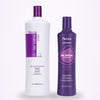
Blue is the colour that cancels out orange in hair. Blue sits directly opposite orange on the colour wheel colourists work from, so blue pigment absorbs the light that orange hair reflects. Our Fanola Wonder No Orange Shampoo carries that blue pigment. Violet cancels yellow, and green cancels red, so each warm tone has its own match.
What colour cancels out orange in hair?
Blue. The salon colour wheel is built from three primaries, red, yellow and blue, and orange is what red and yellow make together. That leaves blue directly opposite orange, and the wheel's rule is that a complementary pigment neutralises the colour it faces. It is the logic behind blue shampoo being blue rather than purple.
Hair is rarely a textbook orange, though. Brassiness lands on a gradient, and the neutraliser slides along with it: ash-blue for orange, blue-violet (often sold as "pearl") for gold, and violet for yellow. Three neighbouring tones, three different answers.

The five warm tones and what cancels each one
As hair lightens, it exposes warmth in a fixed order: red, red-orange, orange, orange-yellow, yellow, pale yellow. Find your tone in the left-hand column and the pigment you need is on the right.
| What you see in the mirror | Its proper name | The colour that cancels it |
|---|---|---|
| Straw or pale banana | Yellow | Violet |
| Warm honey or gold | Yellow-orange ("gold") | Blue-violet, sold as "pearl" |
| Copper or apricot, the carrot cast | Orange | Blue |
| Rust or brick | Red-orange | Blue-green |
| Warm mahogany or auburn | Red | Green |
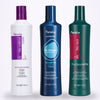
If your brassiness is red rather than orange, the pigment you need is green, which we cover in green shampoo for red tones. Our green line is Fanola No Red.
How to tell whether your brassiness is really orange
This step decides which bottle gives you the result you want.
- Look at it wet, in daylight. Bathroom bulbs run warm and push a beige blonde towards gold. Take a section to a window while it is still soaking wet.
- Compare the ends against the roots. Lightened hair rarely sits at one tone from root to tip, so you may need blue at the top and violet at the bottom.
- Hold something orange next to it. A satsuma works. If the hair looks yellow beside it, the tone is yellow or gold. If it reads as the same family, it is orange, and blue is your pigment.
- Decide before you buy. Telling the two apart is what choosing between blue and purple shampoo comes down to.
Blue and orange make brown, not blonde. On the colour wheel, orange plus blue equals brown, and that is exactly how neutralising works. Nothing is removed. A second pigment is laid over the first, and between them they absorb more of the light hitting the hair, so the warmth disappears.
Why cancelling orange makes hair look cooler and cleaner
Hair that looks orange reflects the orange part of the spectrum and absorbs the blue part. A blue dye does the reverse. Put both on one strand and they absorb across a wider span, so less light comes back and what does is more evenly balanced. The eye reads that as cooler, cleaner and very slightly deeper.
That is why toned hair looks fresher: losing the warm cast makes the colour read cleaner, even though the hair has not been lightened.
Which blue product to use once you know it is orange
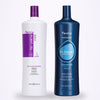
Any product carrying blue pigment cancels orange. What differs is how much lands, how evenly, and how long it stays. Our blue line is Wonder No Orange, made for light brown through to dark blonde hair, the band where orange lives.
- A blue toning shampoo is the lightest and most flexible option. Massage Fanola Wonder No Orange Shampoo 350ml into wet hair, leave it 1 to 5 minutes, and use it twice a week. It cleanses while it deposits, so the tone stays easy to adjust from wash to wash.
- A blue toning mask deposits without a cleanser working against it, which usually means a richer, more even result. Fanola Wonder No Orange Mask 350ml is the step up when you want more tone.
- A professional toner at the backwash is the answer when the tone needs to change direction rather than be maintained, or when the hair is banded. Unlike a toning shampoo, our toners are oxidative dyes mixed with developer, so carry out the allergy alert test described in the pack leaflet before that kind of service. Our guide to Fanola toners explains the options.
Blue pigment can stain hands and towels, so we recommend wearing gloves with Wonder No Orange Shampoo. Technique is covered in our step-by-step guide to using blue shampoo, and how it performs on a darker base in what blue shampoo does on brown hair.

When orange hair needs more lift first
The wheel tells you which pigment to use. How light the hair is decides how much that pigment can do.
A toning shampoo is a direct dye: no peroxide, no ammonia, no developer. It refines the tone you have rather than changing how light your hair is. If the hair is strongly orange because the lightener stopped short of blonde, blue mutes the copper at that same level. Fixing orange hair after bleaching usually means more lift first, then a toner.
Leave the extra lift to your colourist. Re-lightening hair that is already orange from one bleach is how breakage happens. If it needs to go lighter, that is a salon job, particularly on damaged, previously coloured or henna'd hair.
Strand-test any strongly pigmented toning product before a full application, and start at the short end of the timing on the pack. Porous ends take pigment faster than mid-lengths, so blue can land unevenly and read grey-green on the tips.
Common questions
What colour cancels out brassy orange hair?
Blue cancels brassy orange. Blue is orange's complement on the colour wheel, so blue pigment absorbs the light orange hair reflects and the tone reads cooler. If the brassiness is gold rather than copper, blue-violet is the closer match, and if it is rust or brick, blue-green is.
Does blue shampoo lighten orange hair?
No. Blue shampoo carries a preformed dye with no oxidising agent in it, so it does not change the hair's level. It neutralises the orange optically by adding blue on top of it, which is why regular use keeps the tone cool between colour appointments.
Is my brassiness orange or gold?
Gold reads warm and buttery next to something genuinely orange; orange reads coppery or apricot. The distinction matters because gold is yellow-orange and its complement is blue-violet, whereas orange takes plain blue. Check wet hair in daylight, since warm bathroom lighting exaggerates gold.
What colour cancels out red-orange hair?
Blue-green, which sits opposite red-orange on the wheel. In practice colourists reach for whichever of blue or green is closer to the tone in front of them. Rust that leans orange takes blue; rust that leans red takes green.
Does cancelling orange make hair look darker?
Very slightly deeper. Neutralising adds a second pigment rather than removing the first, so the hair absorbs a little more light overall. The result looks cooler and cleaner, which most people describe as brighter.
Blue pigment, for orange and copper tones
Wonder No Orange is made for light brown through to dark blonde hair.
Follow the instructions supplied with the product, wear gloves with strongly pigmented toners, and strand-test before a full application. If your hair needs more lift rather than maintenance, speak to a professional colourist.
Shop the range: browse our Wonder No Orange range and our colour toning range.
-
Posted in
Blue shampoo and orange tones, Brassiness, Colour theory, Orange hair, Toning