Do You Need a Patch Test for Toner? What Fanola's Toners Contain

Do you need a patch test for toner? Yes, if the toner is mixed with developer. Both of the Fanola toners covered here, No Yellow Color Toner and Glow & Glossy Toner, are mixed with developer and list oxidation dye precursors, so do the allergy alert test supplied with the product first. Toning shampoos, masks and foams are a different, developer-free category.
The useful question isn't "permanent or demi-permanent?" It's "is this mixed with developer to make colour inside the hair, or does it deposit colour that is already made?" Toners you mix in a bowl are the first kind. Purple shampoo is the second (see how purple shampoo works).
Do you need a patch test for toner? It depends on the developer
The EU Cosmetics Regulation, which GB's rules are based on, doesn't use the word "toner". It sorts hair dyes into oxidative and non-oxidative, and the UK trade body CTPA puts demi-permanent colour in the oxidative group. That split is the one that matters for allergy. Here is where Fanola's toning products sit, going by Fanola's own pages:
| Fanola product | Mixed with developer? | What the ingredient list shows | Allergy alert test? |
|---|---|---|---|
| Fanola No Yellow Color Toner | Yes. Fanola's Violet Peroxyde pages give 1:2 but no strength (the same line is on the 5 vol and 25 vol pages) | Ammonia, toluene-2,5-diamine sulfate (PTD) and other oxidative dye ingredients | Yes. Follow the allergy test instructions supplied with the product |
| Fanola Glow & Glossy Toner | Yes. Fanola's page gives Violet Peroxide 5 Vol at 1:1 | No ammonia; ethanolamine plus oxidation dye precursors | Yes. Follow the allergy test instructions supplied with the product |
| Fanola No Yellow Shampoo, Mask and Incredible Foam | No | Acid Violet 43, a ready-made violet dye | Fanola's pages print no test. The shampoo and mask pages say to wear gloves |
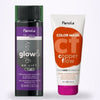
| Fanola Color Mask | No | Ready-made dyes that vary by shade, such as Basic Red 51 or HC Blue No. 15 | Fanola's pages print no test, but warn the mask may cause allergic reactions |
Is toner hair dye?
A developer-mixed toner is hair dye in every sense that matters for allergy. Demi-permanent colour uses the same two classes of dye ingredient as permanent colour, "precursors" and "couplers" that the developer joins into colour inside the hair. The main difference is the alkaliser, not the dye chemistry.

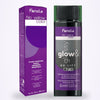
Fanola No Yellow Color Toner
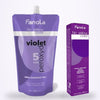
Fanola's page describes this as a colour "con ammoniaca" (with ammonia). Its ingredient list includes PTD, 2,4-diaminophenoxyethanol HCl, 2-amino-3-hydroxypyridine and 1-hydroxyethyl 4,5-diamino pyrazole sulfate. Those are oxidative dye ingredients (precursors and couplers), the chemistry that the developer turns into colour. Fanola's Violet Peroxyde developer pages give the toner a 1:2 mix. The same line appears on both the 5 vol and 25 vol pages, so they don't say which strength. They give no processing time either, so take both from the instructions supplied with the product.
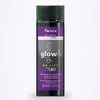
Fanola Glow & Glossy Toner
Fanola calls Glow & Glossy a demi-permanent colour in oil, "senza ammoniaca" (without ammonia), mixed 1:1 with Violet Peroxide 5 Vol. The Toner page's ingredient list includes N,N-bis(2-hydroxyethyl)-p-phenylenediamine sulfate, 2,4-diaminophenoxyethanol HCl and 2-methyl-5-hydroxyethylaminophenol. Several Glow & Glossy shade-family pages (Cenere, Dorati, Marroni Caldi, Rossi) list PTD as well. The exact list depends on the shade, so read the one on your tube.
One trap: some retailers call Glow & Glossy "semi-permanent", while Fanola's page says demi-permanent. "Semi-permanent" is used for both developer-mixed and developer-free products, so the word decides nothing. If it goes in a bowl with developer, treat it as oxidative colour.
Ammonia-free is not precursor-free. Ammonia is an alkaliser. The statutory "can cause severe allergic reactions" warnings attach to dye precursors such as PPD and PTD, and a dermatology review names PPD as the main cause of hair-dye contact allergy. Glow & Glossy swaps the ammonia for ethanolamine and keeps the precursors.
Does "PPD-free" mean a toner is safe if you react to hair dye?
No. Fanola's page for its No Yellow (Ice) colour range, which it says includes two toners, calls the colour "Free from PPD". That is accurate: PPD isn't in the No Yellow Color Toner's ingredient list.
People read "PPD-free" as "allergy-safe" because PPD is the best-known hair-dye allergen. But PPD-free colours can use PTD instead, and Fanola's Ice range does. PTD is PPD with one extra methyl group. In more than 8,000 patch-tested patients, cross-reaction between the two "was commonly found". Common, not universal: no source says every PPD-allergic person reacts to PTD. In February 2025 the ASA upheld a complaint against a "PPD free… high skin tolerance" claim on a product containing PTD, because people allergic to PPD would wrongly assume there was "very little risk" of a reaction.
What to do: if you have ever reacted to hair colour, "PPD-free" is not a workaround (see the warning below).
How do you patch test before toner, and how far ahead?
Fanola's product pages print no test method and no timing for either toner, and we haven't seen the pack leaflet itself, so follow the allergy test instructions supplied with the product. If your pack gives none, ask a professional colourist before using it rather than borrowing another brand's method: Wella tests mixed colour below the crook of the elbow, while an older L'Oréal Professionnel UK book used unmixed product behind the ear. A 2016 study of 40 retail oxidative dyes found their self-test procedures "varied greatly", even within one manufacturer.
On timing, Wella, Schwarzkopf UK and Cosmetics Europe all specify 48 hours. Wella's leaflet treats redness, burning or itching as a sign the colour "must not be applied". An EU scientific committee said in a 2007 preliminary opinion that a 48-hour reading "is known to be too short", because patch test reactions "may develop up to 7 days after application". A reaction later in the week still counts.
Don't colour at all if any of these apply. The statutory label on PPD- and PTD-type dyes says not to colour if you have ever reacted after colouring your hair or to a temporary "black henna" tattoo, or if you have a rash on your face or a sensitive, irritated or damaged scalp.
If your skin or scalp reacts during or after toning, stop and seek medical help.
How reliable is the test, and how often should you do one?
It is imperfect. The EU's Scientific Committee on Consumer Safety (SCCS) said in 2019 that it "cannot, at this stage, endorse" the allergy alert test. Assessing an industry study of people already diagnosed with PPD allergy, it counted the forearm test as picking up 31 of 42 (73.8%). With only 42 people the figure is uncertain: the committee noted it could mean almost every second person getting a false negative. In other words, roughly a quarter of people already known to be allergic were not picked up. In a separate manufacturer-funded study of people already allergic to PPD or PTD, using a dye based on a modified PPD (ME-PPD), 9 of 38 with a negative 45-minute pre-test still reacted at their first colour. That was a short pre-test, not the standard 48-hour check.
In practice, a positive test is a clear stop, and a negative one is not a guarantee (Wella says no protocol gives a 100% guarantee). That is a reason to respect the label warnings, not to skip the test.
How often is where sources openly disagree. Cosmetics Europe says before each use, "even if a hair colouring product has been used before". The NHBF's 2023 salon protocol retests existing clients every six months; FHA insurance says once a year plus screening before each colour. At home, follow the pack. In a salon, follow the pack and your own insurer's wording, because insurer rules don't transfer between insurers. We found no GB law requiring a 48-hour test, but the statutory label does say "Read and follow instructions", and manufacturers put their test in those instructions.
Do purple shampoos, masks and Color Mask need a patch test?
These products have no developer. They deposit ready-formed dyes, so the toner rules don't carry straight across.
What the evidence shows. A 2018 survey of 289 non-oxidative hair dye products found 68 dye substances, "different from those in oxidative hair dye products" and "not covered by patch test series", the standard tests clinics use. In an indicative 2013 memo based on animal data, the EU committee rated several such dyes strong or extreme sensitisers. Fanola's own Color Mask pages carry the warning "può causare reazioni allergiche" (may cause allergic reactions) and say to wear disposable gloves. More on that range in our Fanola Color Mask guide.
What it doesn't show. Human reaction rates for these dyes are unknown, and our sources have nothing on the allergy risk of Acid Violet 43, the dye in No Yellow, either way. A brand not asking for a test is not evidence of low risk.
One poster on a UK salon forum wrote: "you need to skin test for purple shampoo as it contains pigment". The kernel is real: it is a dye, and Fanola's shampoo page says to wear gloves. But no source we checked turns that into a test requirement, and a Welsh dermatology review tells patients already diagnosed with PPD allergy that "wash in-wash out dyes are usually safe". So follow each pack, wear the gloves, and stop if your scalp reacts. For the shampoo itself, see how to use Fanola No Yellow Shampoo.
Common questions
Do I need a patch test for purple shampoo?
No source we checked addresses it, and Fanola's No Yellow Shampoo page prints no allergy test. It does say to wear suitable gloves. Purple shampoo contains a ready-made violet dye and no developer, so it is a different category from a mixed toner. If your scalp reacts, stop using it and seek medical help.
Do you need a patch test for toner after bleaching?
For a developer-mixed toner, yes. Schwarzkopf UK requires no allergy alert test for bleach alone, but says one "must be performed" for a toner used afterwards. Both of the Fanola toners covered here are developer-mixed, so follow the allergy test instructions supplied with each product before the bleach-and-tone appointment.
Can a patch test make you allergic?
For clinic patch testing with 1% PPD, rarely: 1.5% of patients in one study had late reactions the authors judged mostly caused by the test. A Danish retest of 365 volunteers found none. We found no study that has measured whether repeated salon or home allergy alert tests sensitise. The SCCS says regular use "may increase the risk".
I reacted to hair dye once. Can I use a toner instead?
Not a developer-mixed one. The statutory label on PPD- and PTD-type colours says not to colour your hair if you have ever reacted after colouring it. Both of the Fanola toners covered here list dye precursors, and No Yellow Color Toner lists PTD, which commonly cross-reacts with PPD. "Ammonia-free" and "PPD-free" don't change that.
Fanola's developer-mixed toners
Follow the allergy test instructions supplied with each product before use.
Fanola No Yellow Color Toner →
Fanola Glow & Glossy Toner →
Fanola Color Violet Peroxide 5 Vol 1000ml →
All colour and toning products →
More on Fanola toners and toning
Fanola Toner Guide: Which Toner Is Which, and Which Needs a Test →
Fanola No Yellow Toner: How to Mix It, Patch Test and Lighteners →
Glossy Toner or Colour Mask? Fanola Glow & Glossy vs Color Mask →
Always follow the instructions supplied with the product. Patch-test where the manufacturer requires it, and if you are unsure about a colour service, speak to a professional colourist. This article is general information, not medical or legal advice.
-
Posted in
Allergy alert test, Hair colour safety, Toner, Toning